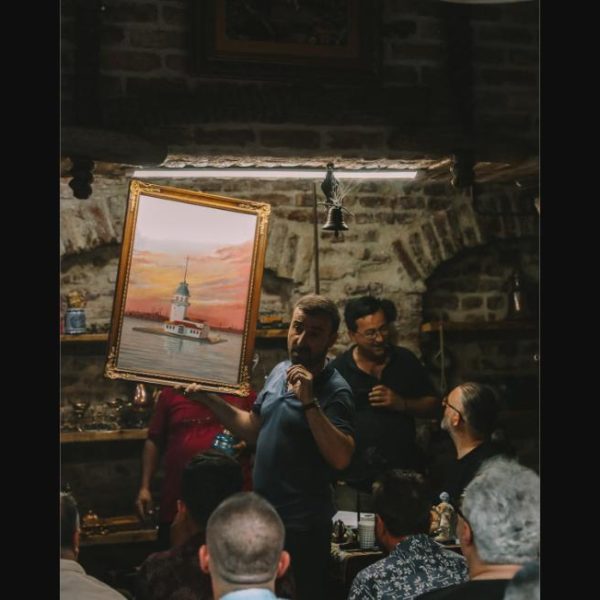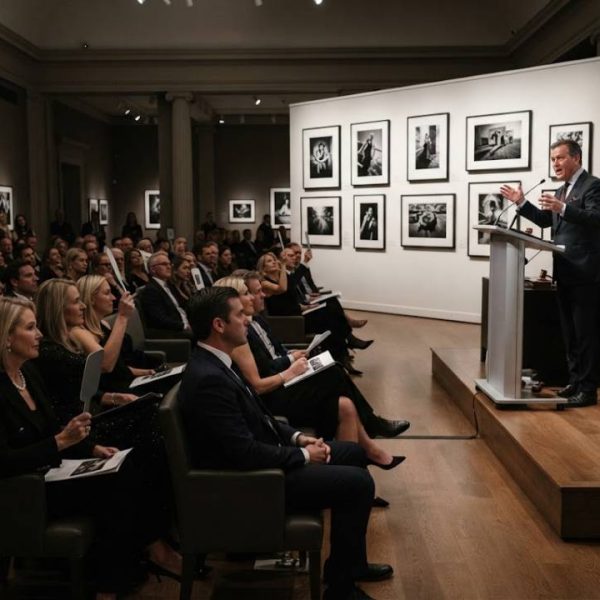
A hammer falls in London, and within seconds the same lot is being described to bidders in Hong Kong, Moscow and Kyiv. International art auctions have quietly become one of the most linguistically demanding corners of the art world, and almost nobody outside the trade realizes how much translation work sits behind a single sale.
Catalog entries, provenance documents, condition reports and artist biographies all need to travel across languages without losing the details that determine whether a collector bids at all.
Why catalog accuracy can make or break a sale
A misdescribed condition report or a garbled provenance note is not a minor inconvenience in the auction world, it can be the difference between a lot selling for its estimate or being passed over entirely. Serious bidders read catalog notes line by line, and any ambiguity introduced by a rushed translation tends to make them cautious rather than curious.
Auction houses that operate across several countries have responded by treating translation as part of the cataloguing process itself, rather than an afterthought handled after the printed catalog is already finalized.
The software quietly running behind the scenes
Larger auction houses increasingly rely on a proper translation management system to keep catalog entries consistent across every language edition of a sale. When a specialist updates a provenance detail two days before an auction, that change needs to propagate to every translated version immediately, not surface as a discrepancy that an eagle-eyed bidder spots first.
Without that kind of centralized workflow, auction houses risk publishing catalog versions that quietly drift apart from each other, a problem that becomes obvious only when a bidder in one market asks a question that makes no sense against the version another market received.
Russian-language collectors and a market that never really slowed down
Despite geopolitical turbulence, demand from Russian-speaking collectors for both historic and contemporary work remains significant, and auction houses that ignore this market do so at their own cost. Specialists in english russian translation are regularly brought in to handle catalog essays and condition reports where cultural and art-historical nuance genuinely changes how a piece is perceived, particularly for works tied to specific historical movements.
Auction specialists who have worked this market for years describe a particular sensitivity around how artist biographies are phrased, since small wording choices can carry unintended political or historical connotations that a purely literal translation would miss entirely.
Ukraine's contemporary art scene finds new international attention
Ukrainian contemporary artists have drawn considerably more international attention in recent years, and auction houses have scrambled to build the infrastructure needed to present this work properly to a global audience. Reliable ukrainian to english translation work has become essential for artist statements and catalog essays that need to convey context a Western audience might otherwise miss entirely, especially work created against the backdrop of ongoing conflict.
Several houses have started commissioning original essays directly from Ukrainian critics and curators rather than translating existing English-language material after the fact, a shift that produces noticeably richer catalog copy even though it adds an extra translation step to an already tight production schedule.
Auction catalogues are translated because bidders are no longer in the room, and a lot equally needs to reach a collector in Seoul or Sao Paulo. Getting the catalogue in front of that collector is a separate problem from getting it translated. Houses increasingly pair their translation spend with digital advertising aimed at collector segments, which is how a niche lot finds three serious bidders instead of one.
That pairing of translation and promotion is exactly where many houses still underinvest. The catalogue may be flawless, yet the emails, social posts and sale announcements around it often go out in one language only. Houses that brief marketing translation services alongside their catalogue work close that gap, so the campaign that sells the lot speaks to collectors as carefully as the catalogue describes it.
What separates a trustworthy auction house from a risky one
Organizations such as the International Confederation of Art and Antique Dealers have long emphasized that transparency in cataloguing is central to buyer trust, and translation accuracy is a quiet but essential part of that transparency. A house that cuts corners on catalog translation is effectively asking international buyers to bid with incomplete information.
The houses that get this right tend to budget for translation early in the cataloguing timeline rather than treating it as a last-minute task squeezed in before a sale goes live.
The unglamorous work behind a glamorous industry
None of this translation work is visible in the auction room itself, where all the attention goes to the paddle raises and the final hammer price. But the smoother a multilingual sale runs, the more careful work almost certainly happened weeks earlier in a much quieter office, far from any spotlight.
Smaller regional auction houses face a harder version of this challenge, since they rarely have in-house language specialists and often must choose between paying for professional translation or accepting the risk of an inconsistent catalog reaching international buyers.
What collectors should watch for
Bidders who want to gauge how seriously a house treats its international catalog can look for a few signs: consistent terminology across language editions, condition reports that read naturally rather than mechanically, and artist biographies that feel written for their audience rather than simply converted from another language.
None of these signs guarantee a flawless auction, but together they suggest a house that understands its buyers are reading in more than one language, and that this fact deserves more than a passing afterthought.
As international bidding continues to grow rather than plateau, the auction houses investing in this kind of quiet linguistic infrastructure now are the ones most likely to keep the trust of collectors who increasingly expect the same clarity in translation that they already expect from a well-lit gallery wall.