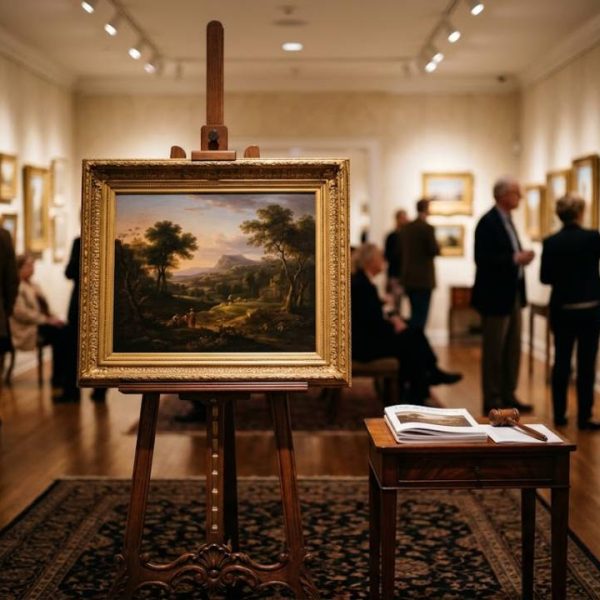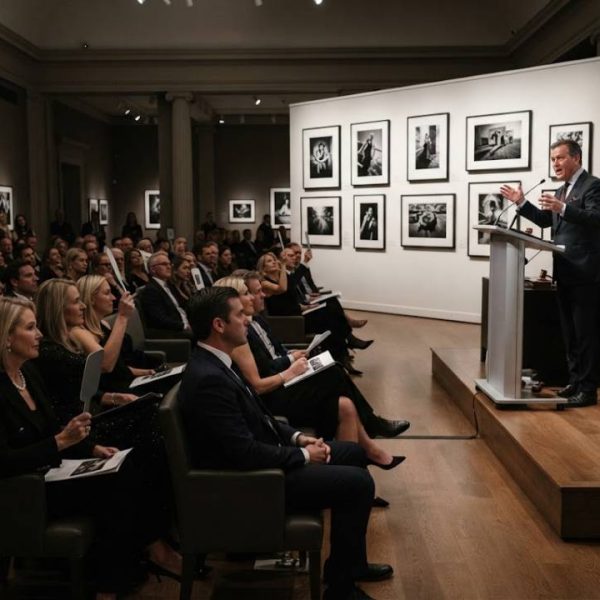
Auction houses covering photography and modern art now field bidders from Seoul to São Paulo, often on the same lot. Each buyer expects a catalog entry that reads naturally in their own language, not a rough approximation stitched together the night before a sale. Provenance research, artist biographies, and condition reports all carry legal weight, so a mistranslated clause about restoration history can turn into a dispute long after the gavel falls.
Houses that handle dozens of sales a year have started treating this workload the way software teams treat code: with version control, glossaries, and a system that keeps every language edition in sync. That is where a translation management system earns its place in the back office, letting editorial teams track which catalog entries have been localized, flag terminology that needs a second opinion, and avoid the copy-paste errors that plague spreadsheet-based workflows.
Russian collectors and a market that never paused
Despite years of disruption, Russian-speaking collectors remain among the most active buyers in the international art photography market, particularly for early twentieth century avant-garde pieces. Cataloging work aimed at this audience has to be precise about historical terminology, since period-specific art movements carry names that do not translate cleanly. Auction houses relying on professional russian translation services report far fewer post-sale queries about attribution details, because collectors receive documentation that matches the nuance of the original scholarly research.
Ukrainian buyers and sellers reshaping the calendar
A newer trend has emerged around Ukrainian artists, whose work has drawn sharp interest from institutional buyers and private collectors alike over the past few years. Galleries representing these artists frequently need materials moved in both directions: exhibition statements written in Ukrainian need an English version for international press, while English-language sale terms need to reach Ukrainian consignors clearly. Firms offering reliable ukrainian to english translation have become a quiet but essential part of getting these works in front of the right buyers without losing context in the process.
Why photo exhibitions face a different challenge than paintings
Photography carries its own translation puzzle. Captions often depend on a photojournalist's original field notes, sometimes scribbled in a notebook decades ago. Exhibition curators piecing together a retrospective have to decide how literally to render those notes, since photography captions double as historical documentation. A curator in Berlin assembling a show of Cold War-era reportage may work from notes in three or four languages before a single wall label goes up.
This is where consistency across an exhibition catalog matters most. A visitor reading wall text in English should get the same factual content as one reading the French or German edition, even if the phrasing differs slightly to sound natural in each language.
What a shared glossary actually prevents
Art terminology drifts by region. A term that means one thing in an auction house glossary can mean something narrower in a museum's internal style guide. Teams that skip a shared glossary tend to discover the mismatch only after a client complains, by which point a printed catalog may already be at the framer. Building that glossary once, and keeping it inside a translation platform rather than scattered across email threads, saves editorial teams from repeating the same correction on every future sale.
Organizations such as the art press that cover the auction circuit have noted how quickly a market can globalize once a single high-profile sale draws international attention. Catalog teams that were not prepared for multilingual demand often scramble afterward, translating years of archived material under deadline pressure instead of building the workflow in advance.
Where this leaves smaller galleries
Not every gallery has the budget of a major auction house, but the same principles scale down. A small photography gallery preparing its first international show can start with a glossary of twenty recurring terms and a simple review process before anything goes to print. The goal is not perfection on day one, but avoiding the kind of error that undermines a buyer's confidence in a piece's documented history.
The next time a record-breaking sale makes headlines, the real story worth noticing is the quieter one: a catalog entry that read just as clearly in Seoul, Kyiv, and Moscow as it did in the saleroom where the hammer finally came down.